

Raylene Chew: Finding Nordic Skiing Far From the Mountains
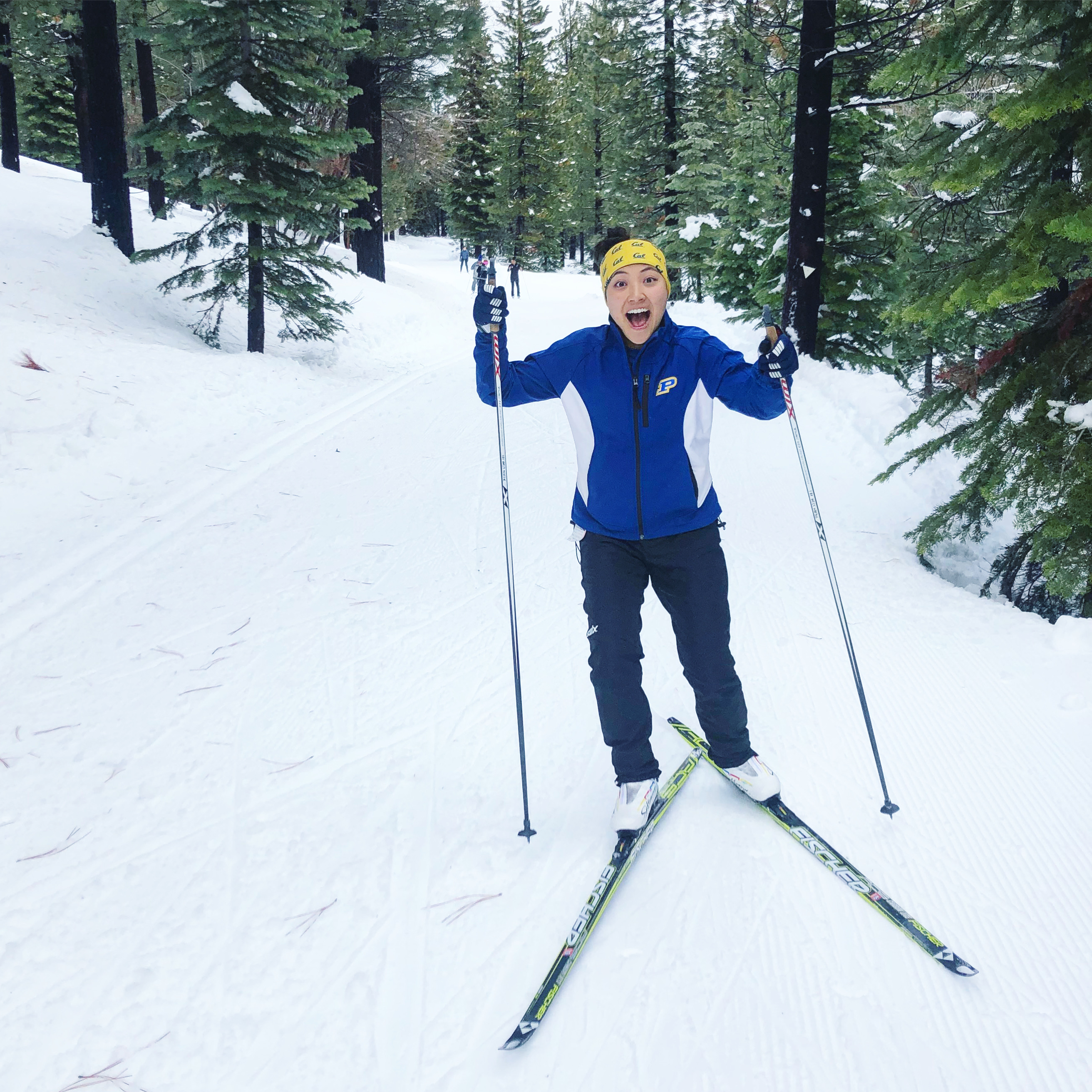
AMBASSADÖRK Raylene explores how growing up in San Jose meant snow days were scarce, but her love of the glide wasn't. With dedication, perseverance and creativity, Raylene carved out an amazing life on skinny skis from the heart of the Silicon Valley.
With that, let's get to it.
ambassadörks
Raylene: Finding Nordic Skiing Far From the Mountains
Most Americans do not regularly wake up to snow outside their door each winter. Winter in many of these areas often looks more like gray sidewalks, cold rain, and the same routines, just with heavier jackets.
I grew up in San Jose, a city of about a million people in the heart of Silicon Valley Bay Area. People move there specifically for the mild weather. Winters are comfortable, predictable, and entirely snowless. There are no frozen lakes, no white trails outside your door and no obvious signs that Nordic skiers could belong there at all.
However, four hours northeast of San Jose, the landscape changes completely. The valley leads up to foothills which give way to evergreens. The air sharpens, and suddenly winter isn’t something you imagine, but something you step into. Snowbanks line the road and skis rattle in the back of the car as the mountains take over.
For a lot of people in the Bay, snow is a once-a-year novelty. For me, it became something worth rearranging my entire weekend, every weekend of winter for.
What I learned early on was that cross-country skiing doesn’t require growing up in a mountain town. It requires consistency, creativity, and a willingness to meet the sport where you are.
I learned how to ski in fits and starts on the weekend, taking lessons alongside my family at Bear Valley XC. No one in my family had prior experience with the sport and for many winters, we only skied when we could make the drive up on a free weekend. As I grew older and started to enjoy a race or two a season, my family began to drive up a little further north to Truckee, CA. It was then in my middle school years that I finally was able to ski alongside other juniors in a program at Auburn Ski Club (ASC).
At ASC I was introduced to rollerskiing and it soon became a constant in my life. Unlike for the Tahoe kids, rollerskiing was not just a substitute I tolerated in the summer and fall. This method of skiing became my year-round foundation.
In the Bay Area, winter training looked nothing like how training was “supposed” to look. There was no snowpack to measure and no trail report to refresh. Instead, there were bike paths, quiet neighborhood roads, and loops that could be repeated before or after school.
This snowless reality meant practicing technique on asphalt, where every imbalance is amplified and every mistake is loud. It meant skating next to commuters on their morning drive to work, fielding curious looks and the occasional unsolicited photo, and learning to hold form through stop signs and less-than-ideal pavement.
It was the furthest thing from glamorous, but it was effective. Rollerskiing stripped the sport down to its essentials: balance, rhythm, timing, and patience. Without the softness of snow to smooth things over, you had to be precise. You had to earn every clean pole plant and stride or otherwise risk more serious injuries than on snow.
Most importantly, rollerskiing made the sport accessible. I didn’t need to live near snow to train like a skier. I just needed a safe stretch of road and the willingness to show up consistently.
For anyone living far from winter, that’s the quiet power of Nordic skiing: the work can happen almost anywhere.
When the weekend finally came, time on snow wasn’t about volume, it was about translation. Every drive north was a chance to test what had been built during the week. The fitness from rollerskiing showed up bit by bit. Muscles that had learned efficiency on pavement slowly adapted to glide on a slippier surface. The technique carried over enough.
Since snow days were scarce to come by, they had to be intentional. There was no coasting through workouts, no assumption that tomorrow would offer another chance. You learned to pay attention to conditions, to feel and listen to what the skis were telling you with the limited time you had.
The routine of rollerskiing during the week to snow on the weekends created a sustainable loop. Asphalt built the engine and snow refined it. Over time, this system proved itself and the approach took me further than I ever expected. I rollerskied at least quadruple as many days as I skied on snow in the year, but when I raced up in Tahoe, it led me to Junior Nationals five times. Not because I grew up surrounded by mountains, but because the work translated. The fitness carried over, the technique held up and the sport met me halfway.
If you live hours from snow, you’re not behind, you’re not late and you’re not doing it wrong. You’re just starting from a different place, and that place is still valid. Winter doesn’t have to be mountainous and snowladen to be meaningful. Sometimes it’s something you spend hours in the car chasing. Sometimes it’s something you refuse to let distance take away. And sometimes, it’s something you choose again and again because it makes you feel more alive than the mild, predictable seasons of your hometown ever could.
The door into this sport is wider than it looks. All you might need is the willingness to keep showing up.
Authors Note: I owe a lot of this journey to my family and specifically my dad, Joel Chew, whose dedication to getting us to Tahoe (often leaving before dawn and many times in questionable winter conditions) made it possible for me to keep showing up. This sport would not have been possible as a junior without their support. When not training for biathlon, you can find Raylene on the grid @raylenechew
the closer What We're Thinking About.
That Raylene is an inspiration for her determination and love of cross-country skiing! and her ability to link together rollerskis and long weekends in the mountains is a feat in adaptability and - mindset.


Comments